Byron Bay Activities |
||
Activities such as rainforest tours, bush walking, hang gliding, tandem sky diving, ultra light flights, yoga classes/retreats, mountain biking in the Hinterland, cycling, kayak with the dolphins, canoeing on the river, learn to surf, surfing, scuba diving, snorkeling, horse riding, deep sea fishing, vintage car tours and Australia's only flying trapeze school cater for all walks of life. And when the sun finally disappears behind the hills you can dine at one of the areas many superb, award winning restaurants, enjoy a local band or theatrical production... or stroll along a serene moonlit beach, looking forward to your next day in paradise. There is always enough to do in Byron Bay, you can go scuba-diving at Julian Rocks Marine reserve and swim with tropical fish and sea turtles, see dolphins, rays and whales! See the most beautiful sunrises from the lighthouse. Get the experience of a lifetime with a 14,000 feet skydive with an amazing view over Byron Bay's coast, this is Australia's highest skydive! Take a stroll from the lighthouse through 47 ha of remnant vegetation down to the old whaling station at the coast. The Julian Rocks Marine Park is an underwater wonderland for divers to explore. It is where temperate and tropical currents meet. This area became part of Cape Byron Marine Park in 2002. There are over 400 species of marine life in the Park. The Cape which sits 100 meters above the Pacific Ocean is now recognized as the best land based whale watching site in Australia and is fast attracting similar status world wide. The whale watch season begins on the 1st July through to October and attracts visitors from all over Australia and overseas. The beauty of Byron is that there’s so much to do after a long day lounging on the beach. |
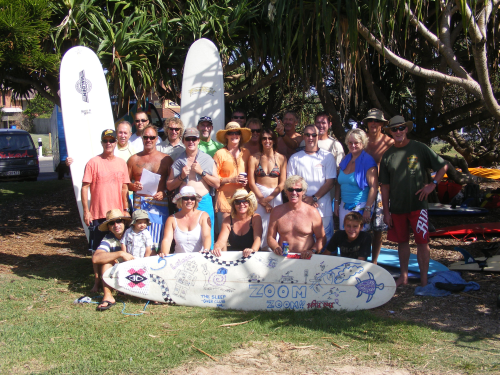
The Surfing - Beach life – (check out the latest surf conditions here), Byron Bay has 9 outstanding surfing beaches, for which it is internationally known; 'The Pass' lies directly next to the world famous Byron Bay lighthouse and is a very popular surf spot, 'The wreck' which is good for beginning surfers, then you have the main beach, Belongil beach, Watego's and little Watego's, 'the Cosy Corner' which is protected by the Arakwal National Park, Clarkes Beach which is great for paragliding and last but not least 'Tallows beach' which is really good for beach fishing (don’t forget to buy a license). Go a little further afield to Lennox Head or Ballina not to mention Brunswick Heads – Byron Shire is a Surfer’s dream come true. Follow the morning surf with breakfast at one of the many café’s in town. While you are in the area, don't neglect the Byron Hinterland - a lush, rolling patchwork of tropical fruit, sugar cane and macadamia farms, state forests, national parks and world heritage listed rainforests. These natural wonders are interwoven by a network of quaint towns and villages whose shops, galleries and weekend markets offer an array of arts and crafts, many created by the region's own renowned artists. For the adventurous, you can try hang-gliding, rock climbing, mountain biking, learn to surf, or go sea kayaking; while those after a more relaxed pace can unwind on the vast stretches of beach or browse through the town’s many unique stores. |
|
Events: Byron Bay has heaps of activities to keep you entertained but if that isn’t enough for you, Byron Bay is also host to many events… Here’s a few of the most famous and the biggest on the Byron Bay Events Calendar! Byron Bay Events – Major Events in Byron Bay |
||
|
||
History:Captain James Cook named the area on May 15, 1770; He named the area Byron after John Byron, the grandfather of Lord Byron (the famous poet) and a navigator. Some of the early cedar cutters became the first permanent settlers in the region in the 1860s. When legislation was passed in 1861 that enabled anyone to select a block of Crown land at one pound per acre, the first European land owners, known as 'selectors', settled in the area. In 1888, the first post office was established. In the same year, the jetty was opened. The cost for a first class passage from Sydney to Byron Bay in 1912 was one pound seventeen and six pence. In the ‘steerage’ section it was one pound.
However the North Coast run was known to be treacherous at times, and many ships perished. But the Wollongbar, the pride of the fleet had a different final experience. She was loading at the Jetty at Byron Bay but the weather was deteriorating quickly and eventually the master decided to try and get her out to sea. They cast off but a succession of big seas caused her to bump heavily on the shallow bottom, which wrecked her propellers. Anchors could not hold her and soon she was driven into the beach where big seas broke right over her.
|
The ocean side of the vessel was a mass of twisted steel. Eventually she was sold for scrap and the upper part of the once noble ship was dismantled. To this day her boilers and part of her steerage can be seen in the popular surfing spot. Click here for further local shipwreck information. Construction of the Cape Byron lighthouse, which began in 1899, was complete by 1901. A major event for the district, special trains carried visitors from Lismore and Murwillumbah for the opening by the Premier of New South Wales. Byron quickly began growing into a 'real town' with the emergence of hotels, stores and sporting groups. By the time of World War I, Byron had a population of 1500. The first electricity to the town was switched on in 1926 and work on a new jetty built to accommodate rail carriages was complete by 1929. Land values began to skyrocket in the prosperous period following World War II. In 1954 a cyclone demolished more than 180m (600ft) of the Byron Bay jetty, crippling the local fishing industry but igniting more progressive approaches to environmental issues, which have since become entrenched in the fabric of Byron's society. With whale oil and meat becoming valuable commodities, the first whale was caught off Byron in 1954. Within eight short years, whale numbers had plummeted and the industry was no longer sustainable. The focus changed from primary production to ecotourism, permaculture, alternative medicine, bush tucker farming, music and the arts. Surfing culture flourished in the 1960s and 1970s, while the Aquarius Festival in Nimbin in 1973 put the area on the map as a mecca for hippies. The headland now known as Cape Byron is more than 200 million years old, forming part of the world's oldest caldera: the rim of a gigantic extinct volcano. It remains an important sacred site to the local Arakwal and Bundjalung people. What we now call Byron Bay was called 'Cavvanba' by the Bunjalong people and was the common territory at the junction of the group's northern and southern tribes. Byron sits on what used to be a swamp, some of which still exists in the paperbark forest to the west of the town. Byron continues to be a home for residents from all socio-economic backgrounds and walks of life. It is famous for its laid-back and alternative lifestyle, but also has a higher proportion of 'baby boomers' than any other town in Australia.
|
|